It's not the sugar
How a Diabetes Doctor Got His Wife's Mornings Back With a Rare Olive From the Mount of Olives
Not the sugar. Not her genes. He says the real trouble starts inside the pancreas — and 5 lies keep people over 50 from ever looking there.
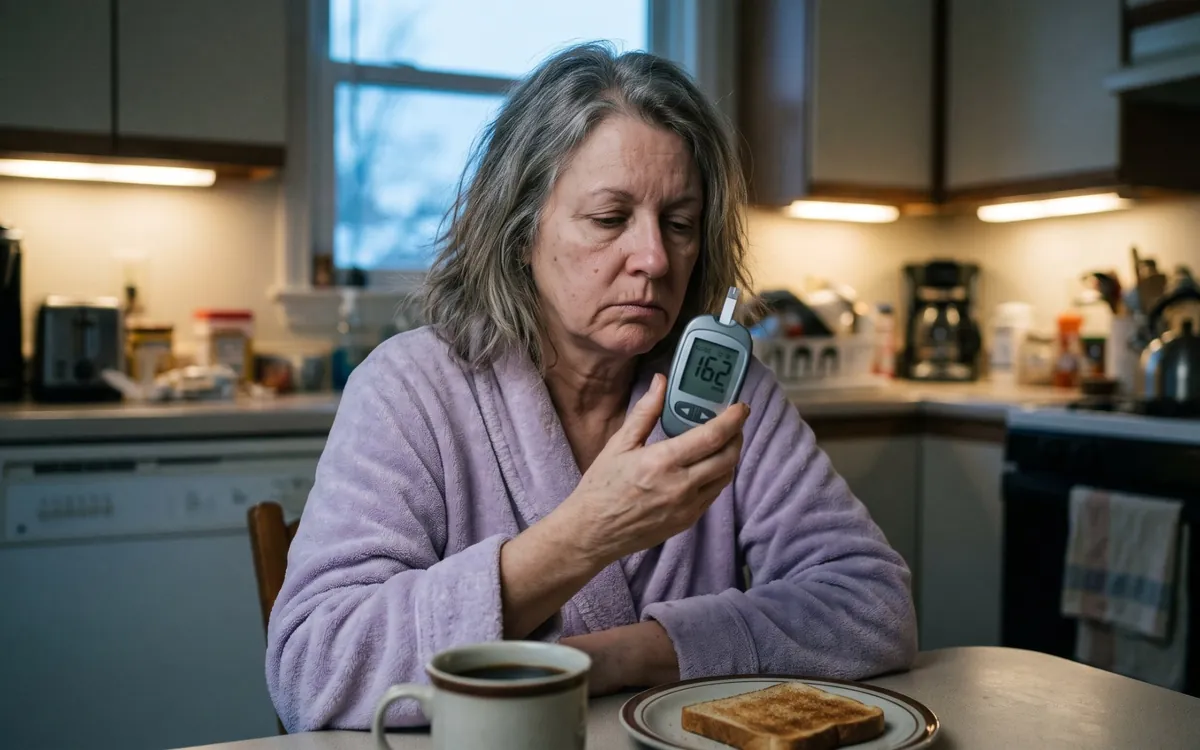
6:40 a.m.
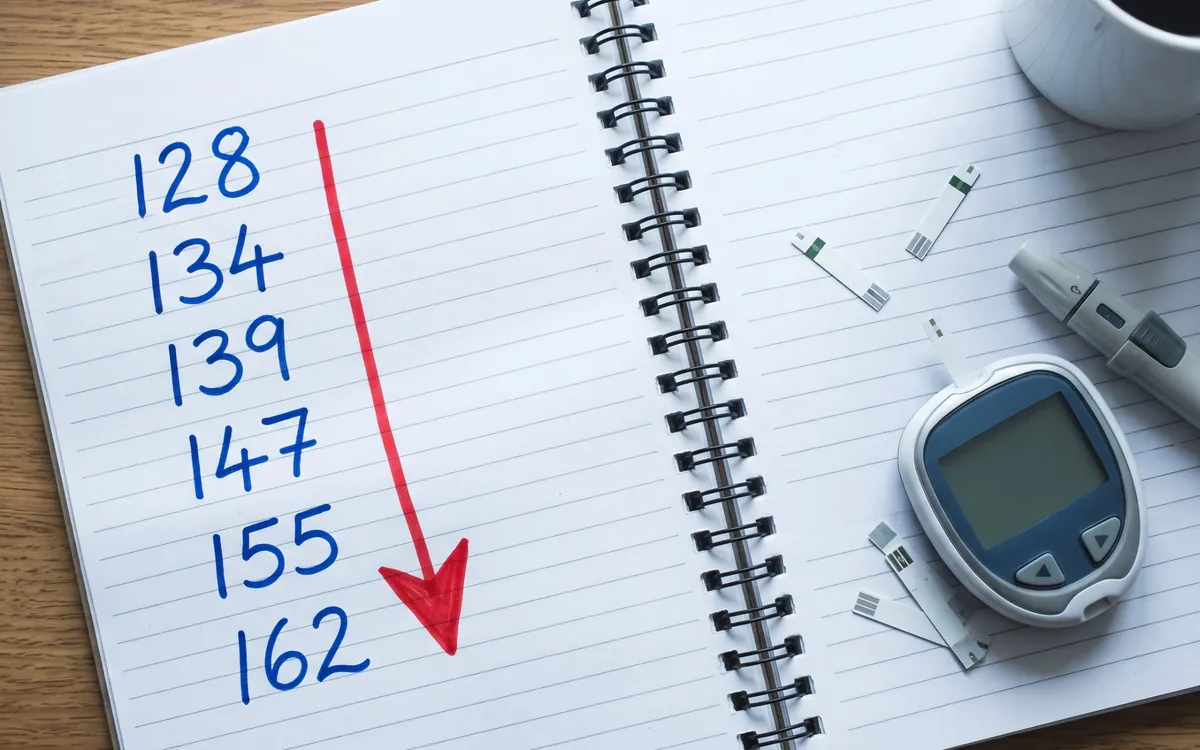
She pricks her finger before the coffee is even made. Waits for the beep.
162.
She hasn't touched dessert in three years. She walks every morning before sunrise. She takes every pill on the minute.
Tonight at dinner, she'll do the math again — carbs, portions, what the next reading will say — while everyone else at the table just eats.
And at her next appointment, she'll hear what millions of Americans over 50 hear: "You're doing fine. This is just how the disease works."
More than 38 million Americans live with diabetes, and nearly 98 million more adults have prediabetes.1 Almost all of them have been handed that same explanation.
Dr. Daniel Reeves gave it himself, for 30 years. He's a physician who spent three decades treating patients with type 2 diabetes. Then the patient sitting across from him was his own wife, Sarah.
Sarah did everything right. In his words, she was "the model patient." And every three months they sat in the same office and watched her numbers climb anyway.
Then came their granddaughter Emma's fifth birthday. Five little candles. The whole family in one room. Sarah leaned in to help Emma blow them out — and collapsed in front of the cake.
"Wake up, Grandma. Wake up."
That night, in a plastic chair beside her hospital bed, Dr. Reeves stopped asking how to control Sarah's number. He started asking what was pushing it up in the first place.
If it isn't the sugar… what is it?
His answer, he says, was hiding in the pancreas — the small organ behind your stomach that makes your insulin. What he believes he found there is something no routine blood test looks for: a parasite, settled into the pancreas, intercepting insulin before the body can use it.
Insulin, he explains, is the key that lets sugar into your cells. A hormone called GLP-1 is the alarm that tells your body to use that key after you eat. Lose both, and the sugar has nowhere to go but your blood.
And what finally turned things around for Sarah, he says, started with a single verse about olive oil — read out loud in a church he hadn't set foot in for years.
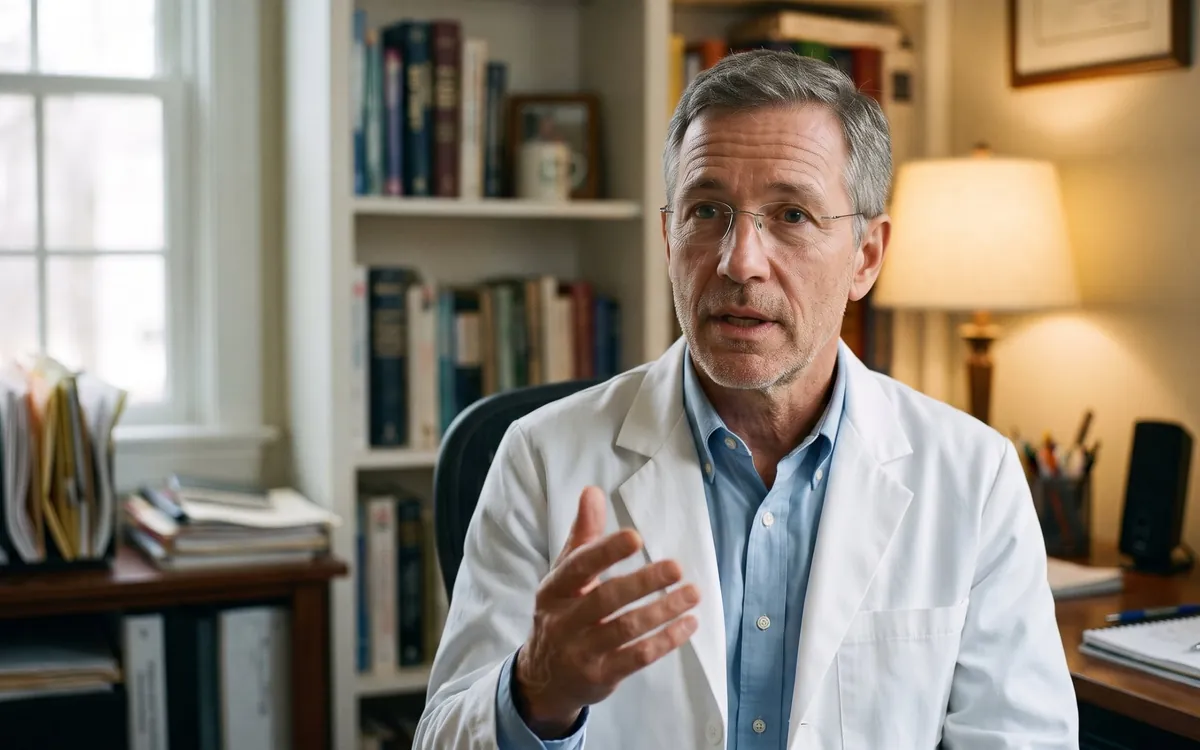
 Dr. Daniel ReevesFree presentation
It's not the sugar. Here's what it is.
He tells the whole story in his free presentation. Or keep reading: the 5 lies are below.
The 5 Lies
What Dr. Reeves found, he says, is that people over 50 are handed a series of comfortable lies about their blood sugar. And every one of them keeps a person exactly where they are: pricking a finger before breakfast. Turning down the dinner invitation, just in case. Watching the grandkids eat birthday cake from across the room.
And then there's the part nobody says out loud.
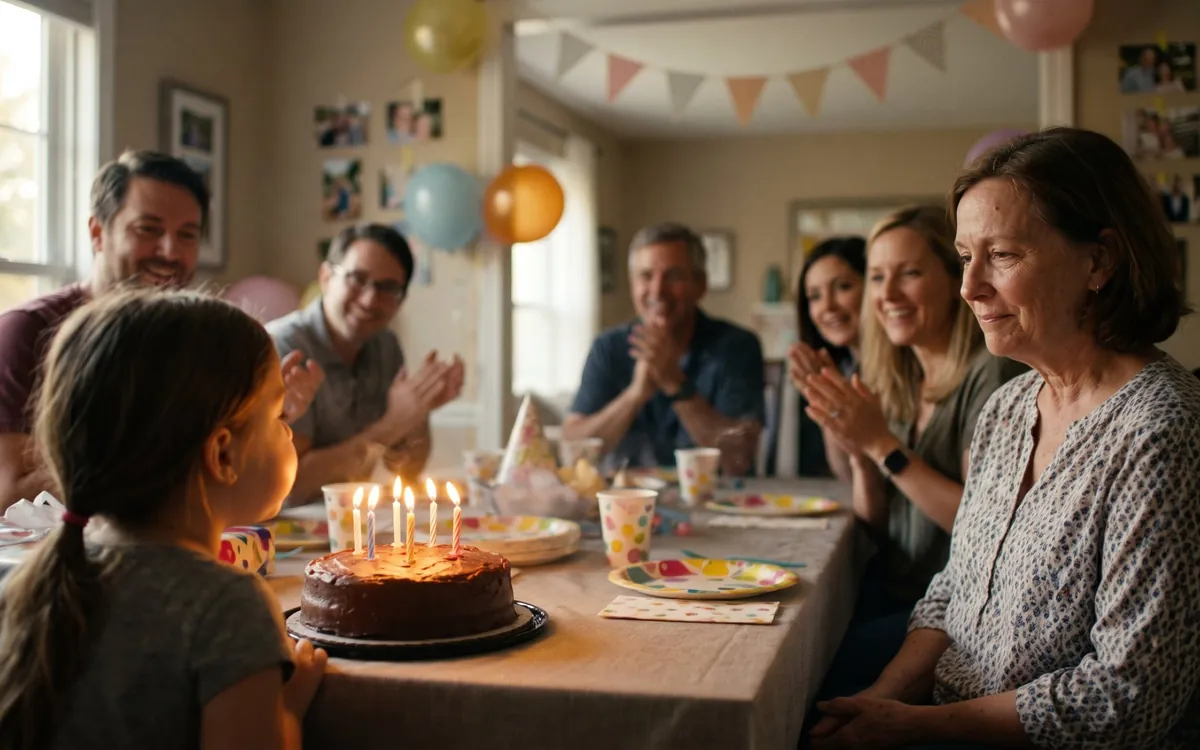
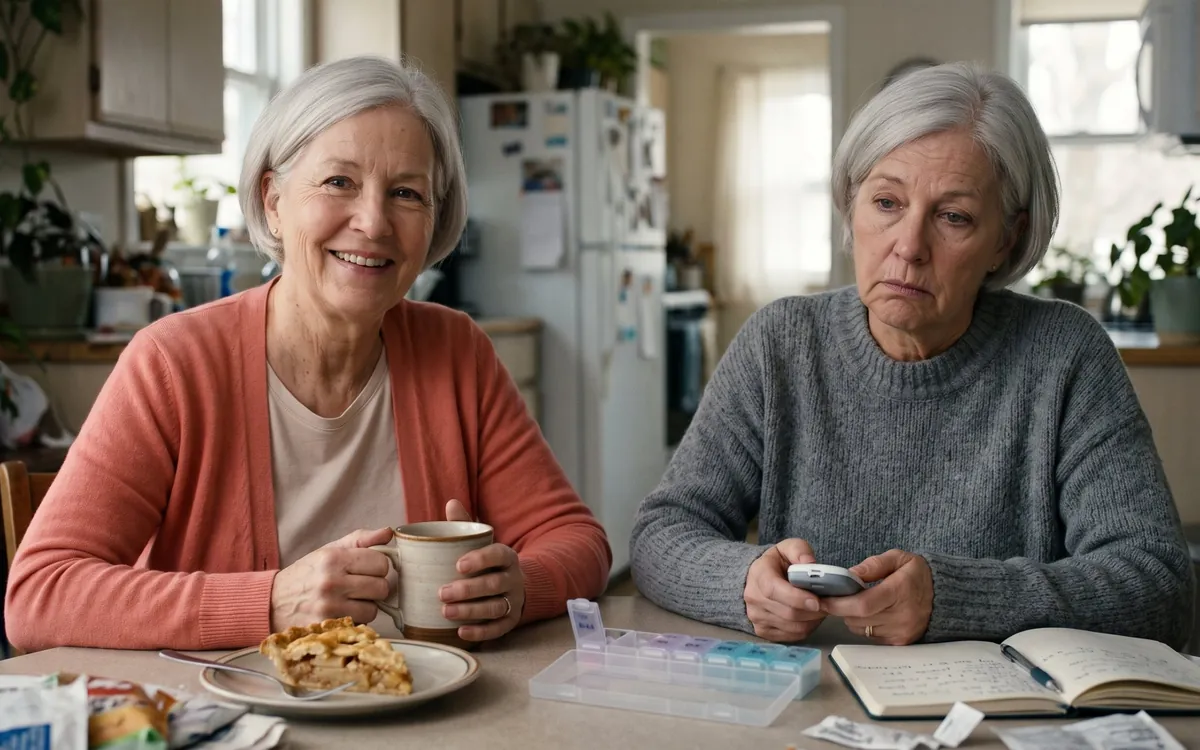
It's your daughter glancing at your plate and pretending she didn't. It's the quiet drive home after the lab results, when neither of you mentions the number.
Sarah put words to what most people never say. She was afraid of becoming "the kind of grandmother my grandchildren would have to whisper around."
After the birthday, she said it even plainer: "I had become the sick grandma. The burden my family loved too much to admit I was."
Nobody fights about it. Nobody says a word. Little by little, the person the family used to lean on becomes the person the family worries about.
Here are the five — starting with the one everyone has heard, and ending with the one almost nobody questions.
"It's the sugar. Just cut it out."
Dr. Reeves: "Sarah hadn't touched a dessert in three years. Her numbers climbed anyway."
The morning after her collapse, he went down to the hospital cafeteria. Ahead of him in line was a man of about 80, piling his tray with donuts, a muffin and a caramel latte.
Dr. Reeves couldn't help himself. Sir, aren't you worried about your blood sugar? The man just smiled. He'd eaten like that since he was a boy, he said. Never had a problem in his life.
So why can an 80-year-old eat sugar every morning and never come close to diabetes — while a woman who gave it up completely ends up on the floor at her granddaughter's birthday?
Sugar raises blood sugar. Nobody disputes that. But if sugar alone were the cause, the man with the donuts would have been the one in the hospital bed.
Cut the sugar and still climbing? See what Dr. Reeves says is really behind it →
"It runs in the family."
This is the one that makes people give up. Mom had it. Grandpa had it. It was always coming for me.
Look at identical twins. Same genes. Same childhood. Often the same dinner table for decades. If type 2 diabetes were simply written in the DNA, identical twins would match.
Very often, they don't.
In a nationwide study of nearly 14,000 pairs of Finnish twins, when one identical twin had type 2 diabetes, the other twin — same genes — had it only about one time in three.2
The researchers concluded that genes and environment both play a significant role. Genes matter. But they are clearly not the whole story.
So what's the rest of it?
The Door Was Left Open
Dr. Reeves found the first clue in a conversation with Dr. Alan Brooks, an endocrinologist who has spent 30 years warning Americans about what ends up in their food. His point: the trouble doesn't start in the pancreas. It starts decades earlier.
The American kitchen is full of things that didn't exist 50 years ago. Take BPA — bisphenol A — used in many hard plastics and in the linings of food cans. When researchers looked at more than 1,400 American adults, those with the highest BPA levels in their urine were more likely to have diabetes.3 It's a link, not proof. But plastic in the human body has finally become front-page news:
- The federal government launched a $144 million program to measure — and eventually remove — microplastics from the human body.4
- For the first time, the EPA put microplastics on its list of possible drinking-water contaminants.5
- Europe moved to ban BPA from materials that touch food.6
According to Dr. Reeves, years of these chemicals wear the body's defenses down. "The toxins crack the door open," Dr. Brooks told him. "And something walks right in."
What He Says Is Living in the Pancreas
Dr. Reeves believes what walks in is a parasite — one that settles into the pancreas and, as he describes it, does three things:
- It burrows into the tissue and seals itself in, out of reach of the immune system.
- It intercepts the insulin the pancreas releases, before it can do its job.
- It wipes out GLP-1, the body's after-meal alarm.
That, he says, is why Sarah's number kept climbing no matter how perfectly she followed the rules.
After a meal, GLP-1 rings the alarm. Insulin turns the key. The sugar moves out of the blood and into the cells that burn it. Take both away, he explains, and the sugar simply stays where it is — after every meal, no matter how small.
Why hasn't your doctor brought this up? Dr. Reeves's answer is simple: almost nobody has been looking. A routine blood test measures the number. It doesn't look inside the pancreas.
And where do the chemicals that, in his view, open the door come from? Mostly from things that don't look dangerous at all:
- Last night's leftovers, microwaved in a plastic container.
- Canned soup, canned beans, canned everything.
- Hot coffee through a plastic lid.
- The water bottle that sat in a hot car all afternoon.
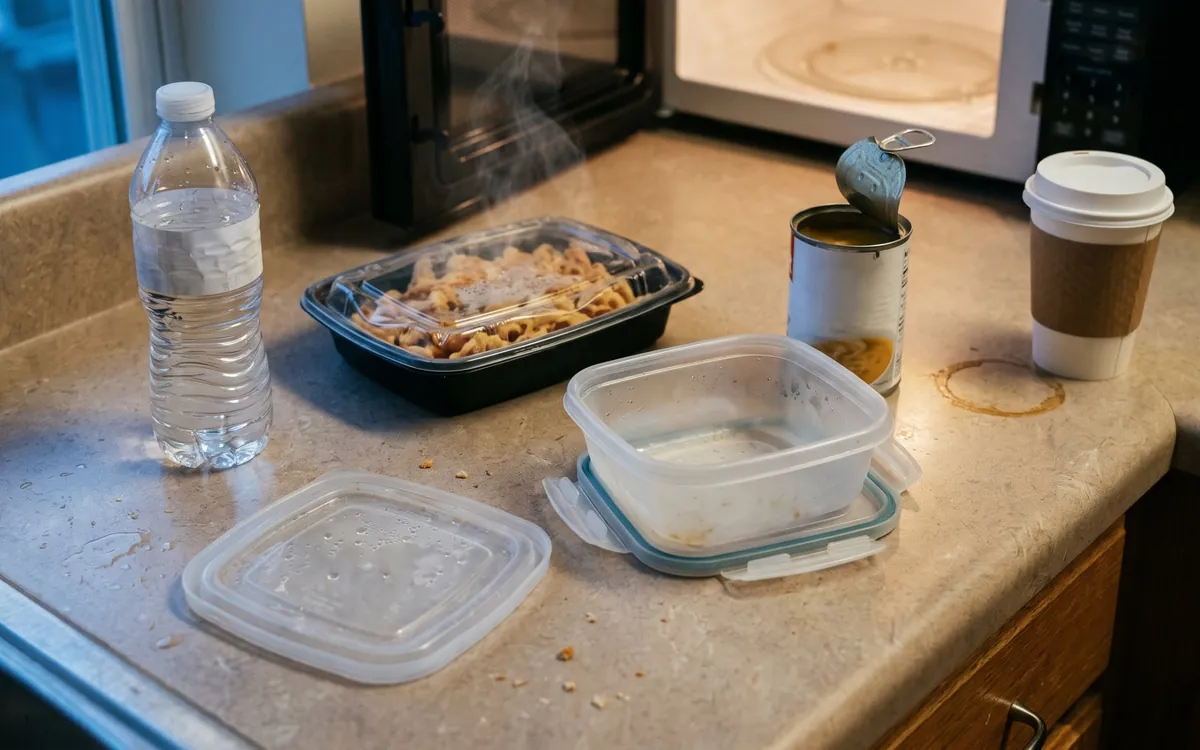
If there's one habit Dr. Reeves would change first, it's heating food or drinks in plastic. Heat helps chemicals move out of the container and into what's inside it.
And that brings us to the two lies that keep people stuck.
"Your prescription will take care of it."
Sarah took every pill on the minute it was prescribed. One for the diabetes. Another for the blood pressure. And every three months, the same script: cut the sugar, take your medicine, learn to live with it.
Dr. Reeves isn't against medication. He prescribed it for 30 years. His point is about what it was built to do.
Dr. Reeves: "The medicine controls the number. It was never designed to reach what's driving it."
One morning, he says, he looked down at his own prescription pad and the truth hit him. "I wasn't healing anyone. I was renting my patients' own organs back to them, one prescription at a time."
 Dr. Daniel ReevesFree presentation
Why it keeps climbing
Dr. Reeves explains the parasite, the key and the alarm — and reveals Lie #1 — in his presentation.
▶ Watch the PresentationFree to watch · no email, no sign-up"A cinnamon capsule will fix it."
When Dr. Reeves started looking for something natural to help Sarah, he went through the usual list. Berberine. Apple cider vinegar. Chromium. Omega-3. Cinnamon.
Nothing.
Part of the problem, he says, is the trip. Anything you swallow — a capsule, a gummy, a tea — has to survive stomach acid first, then the liver. According to Dr. Reeves, the delicate plant compounds that matter here get broken down so fast on that route that very little is left by the time anything reaches the pancreas.
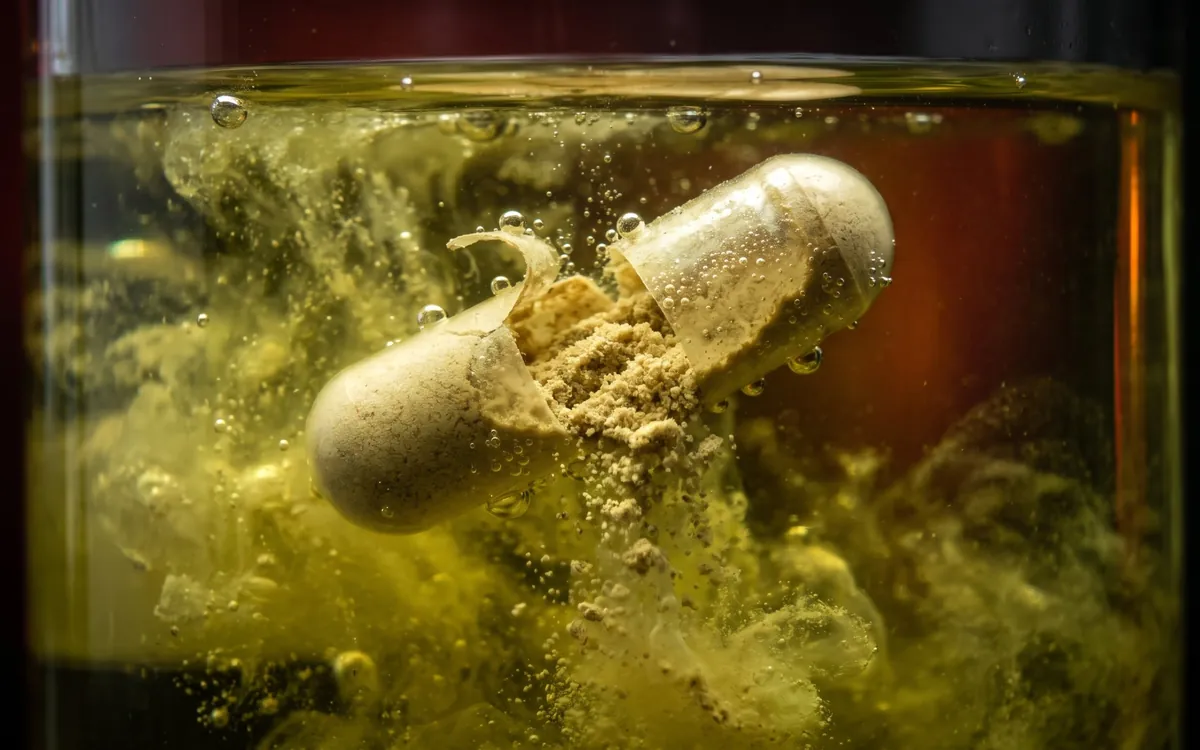
"You're not taking supplements," he says. "You're making expensive urine."
So What's Lie #1?
It's the one Dr. Reeves believed himself — through 30 years of medicine.
Months of testing had gone nowhere. Exhausted, and ready to give up for the first time in his career, he remembered something Sarah's mother used to say: in our darkest moments, we turn back to God.
So one Sunday he drove to a church he hadn't set foot in for years and sat in the back pew. In the middle of the sermon, Pastor John read from the Book of James:

Olive oil, he realized, shows up in Scripture again and again — almost always alongside healing. As a doctor, he'd always called it "healthy." He had never asked why.
Modern research has started to catch up. In a large Spanish trial, older adults who followed a Mediterranean diet rich in extra-virgin olive oil were about 40% less likely to develop type 2 diabetes than those on a control diet.7 In a smaller study of healthy adults, adding extra-virgin olive oil to a meal was linked to lower blood sugar afterward — and higher levels of GLP-1, the "alarm" hormone.8
Back in 2005, scientists identified a compound in fresh extra-virgin olive oil that acts in the body in a way similar to ibuprofen. They named it oleocanthal.9
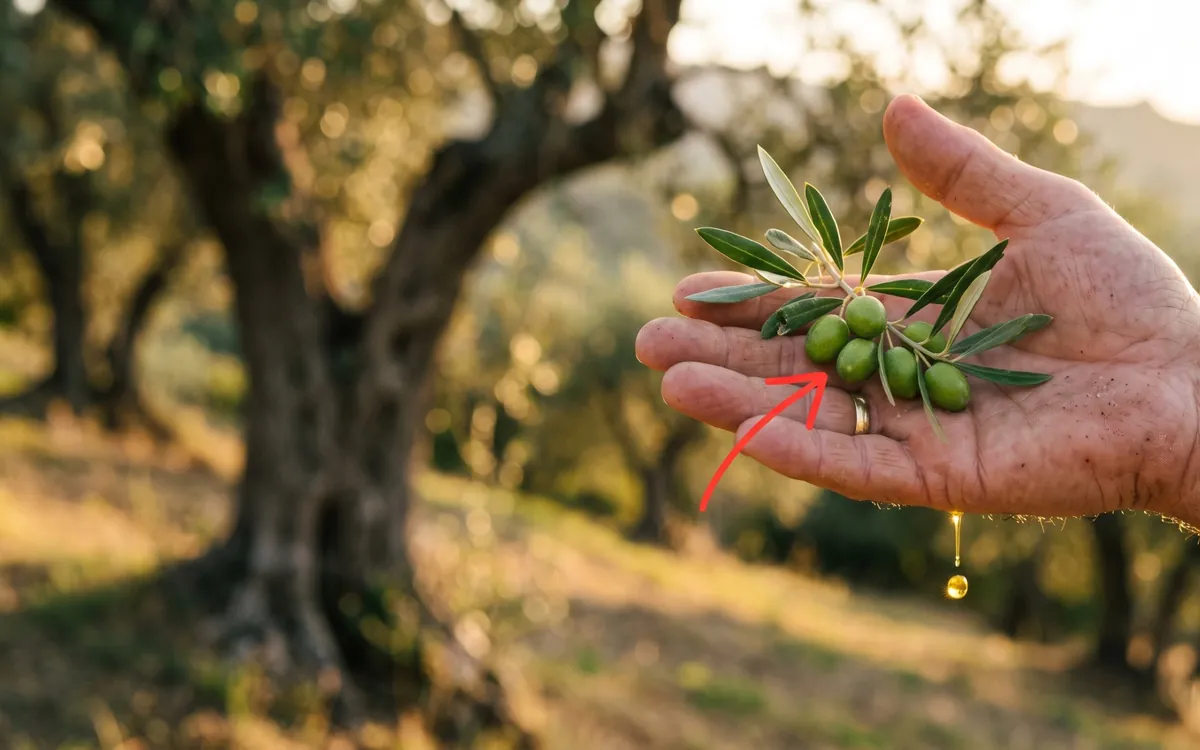
That's the compound Dr. Reeves zeroed in on. And it led him somewhere he never expected: to a rare olive tree grown for centuries on the Mount of Olives.
But there was a catch. To get what he was after from ordinary olive oil, he says, a person would have to drink an unrealistic amount every single day — and most of it would never make it past the stomach.
It sounds almost too simple. What he did about it is the part he saves for his presentation.
The lie almost everyone believes about the olive oil in their pantry
Which olive, what he combined it with, and what happened to Sarah on day seven — the morning of the blueberry pancakes — is the part Dr. Reeves walks through in his presentation.
▶ Watch: The Mount of Olives DiscoveryFree presentation · plays on any device"He Gave Me My Life Back"
Near the end of the presentation, Dr. Reeves reads some of the messages he says people sent him after trying what he shows in the video. Three of them:
"My granddaughter turns 6 in March. I baked her cake from scratch. I hadn't baked anything in nine years… I lit the candles, I watched her blow them out, and then I sat down next to her and ate a slice with her. This was never about blood sugar. It was about everything that disease had stolen from me."
"My daughter showed me this video and I almost slammed the laptop shut. I'd tried everything. Supplements that did nothing. Diets that made me miserable. A doctor who told me to just try harder for the eleventh time. But she begged me… My doctor ran my labs twice because he didn't believe them. I sat in his office and cried. Eleven years of thinking I was the problem. Turns out my body never quit on me."
"I'd stopped going to my grandson's baseball games because I couldn't make it through three innings without crashing. I told my wife at the kitchen table I'd probably lose my left foot within 18 months. She didn't say a word. The next morning she just hit play on this video and walked out of the room… Last Saturday I took my grandson fishing. Seven hours on the lake. He got tired before I did."
Messages as read by Dr. Reeves in his presentation, shortened for length. Individual experiences vary; these are not typical results and are not medical advice.
 Dr. Daniel ReevesFree presentation
Lie #1: the olive almost nobody knows